

Why is Banff a must-visit destination in Canada?
Banff National Park, established in 1885, is Canada’s first national park and the third national park in the world. Located in the heart of the Rocky Mountains in Alberta, it covers an area of 6,641 square kilometers—equivalent to six times the size of Hong Kong.
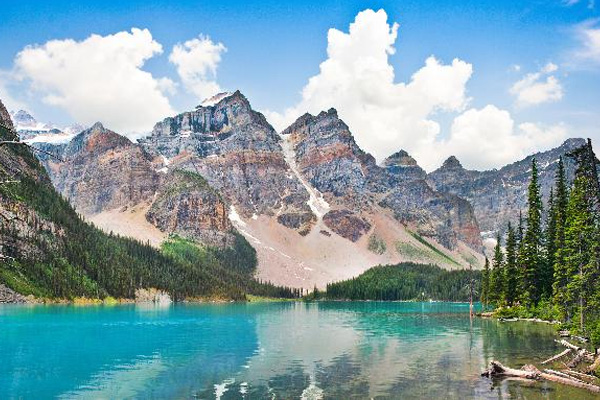
This is not just a park—it is a complete alpine ecosystem. With U-shaped valleys carved by glaciers, emerald-green alpine lakes, snow-capped peaks year-round, and wildlife visible everywhere, Banff has become a mecca for outdoor enthusiasts and photographers from around the world.
When is the best time to go?
Summer (June–September) This is the peak season in Banff. Daytime temperatures range from 15 to 25°C, and all hiking trails, lakes, and gondolas are open. Lake Louise and Moraine Lake take on their iconic ”milky emerald” hue during this season. However, this is also when the area is most crowded and accommodations are at their most expensive.
Fall (mid-September–October) This is my personal favorite season. The number of tourists drops sharply, the larch trees turn golden yellow, and the entire valley looks as if it’s ablaze. The last two weeks of September are the best time to see the larch trees.
Winter (November–April) Banff has transformed into a world-class ski destination. Its three major ski resorts—Mt. Norquay, Sunshine Village, and Lake Louise Ski Resort—offer more than 8,000 acres of skiable terrain. Then there are the Banff Upper Hot Springs. Soaking in a 40°C natural hot spring outdoors in temperatures in the low teens below zero, with snowflakes drifting overhead, is an experience you won’t find anywhere else.
Spring (mid-April–May) It’s the off-season, so there may still be snow on some high-altitude sections of the road, but the upside is that there are very few tourists, prices are low, and wildflowers are beginning to bloom in the valleys.
Must-See Attractions: Don't Miss a Single One
1. Banff Town
The town of Banff is the heart of the park. At an elevation of 1,383 meters, it is Canada’s highest-elevation town. Banff Avenue is lined with century-old stone buildings, and at the end of the street stands the majestic Cascade Mountain. The town offers a wide variety of restaurants, souvenir shops, and outdoor gear stores. We recommend staying in town for at least one night and taking an evening stroll along the Bow River to watch the sunset turn the mountain peaks golden.
2. Sulphur Mountain & Banff Gondola
The gondola takes you to the summit at an elevation of 2,281 meters in 8 minutes. From the observation deck, you’ll enjoy a 360-degree panoramic view—the Bow River Valley, the town of Banff, Lake Minnewanka, and the Rocky Mountains stretching into the distance. At the summit, a 1-kilometer-long wooden boardwalk leads to the historic weather station. We recommend arriving an hour before sunset to witness an unforgettable alpine sunset.
3. Bow Falls
Although the drop is only 9 meters, Bow River Falls is famous because Marilyn Monroe filmed *River of No Return* there in 1953. The falls are located right on the outskirts of Banff and are within walking distance; the light is best in the early morning.
4. Lake Minnewanka
The longest lake in Banff National Park, stretching 21 kilometers. You can take a boat tour of the lake and listen to the guide’s stories about the old town submerged at the bottom. It’s also a great spot for fishing and diving—there really is a sunken resort at the bottom of the lake.
5. Johnston Canyon
Located about 25 kilometers from the town of Banff, this is one of Banff’s most popular hiking trails. Walk along the steel boardwalk clinging to the canyon wall, with a rushing stream flowing below. The hike to the Lower Falls is about 1.1 kilometers (30 minutes), and to the Upper Falls is about 2.7 kilometers (1 hour). In winter, when the falls freeze over, the area becomes a mecca for ice climbing.
An Experience You Won't Want to Miss
- Road Trip: The Icefields Parkway from Banff to Jasper is hailed as ”one of the most beautiful roads in the world.” It stretches 232 kilometers and is lined with glaciers, waterfalls, lakes, and wildlife.
- Wildlife Viewing: Banff is a paradise for wildlife. Bighorn sheep roam along the roadside, elk wander through town, and if you’re lucky, you might even spot black bears and grizzly bears. Remember to keep a safe distance (at least 100 meters from bears and at least 30 meters from other animals).
- Hiking Paradise: From simple lakeside strolls to multi-day backcountry treks, Banff offers over 1,600 kilometers of hiking trails. Sentinel Pass and the Plain of Six Glaciers are among the classic routes.
- Stargazing on a Dark Night: The night sky in Banff is virtually free of light pollution. If you attend the annual Banff Dark Sky Festival (usually held in October), you can observe deep-sky objects through professional telescopes.
Directions
Banff is approximately 145 kilometers from Calgary International Airport (YYC), about a 1.5-hour drive. There is currently no direct public transportation to Banff—This is also why most tourists choose to hire a private car or drive themselves.。
Leaving Calgary and heading west on Highway 1 (the Trans-Canada Highway), you’ll begin to enter the Rocky Mountain foothills after about 40 minutes, and the scenery gradually becomes more spectacular.
Accommodation Recommendations
Hotel prices in Banff Town are relatively high, generally ranging from 300 to 800 Canadian dollars per night during the summer. Travelers on a budget may want to consider Canmore, which is only 25 kilometers from Banff and offers more affordable rates. However, regardless of where you stay, be sure to book 2–3 months in advance during peak season.
Important Notes
- National Park Admission Tickets: To enter Banff, you need to purchase a Park Pass. A one-day pass for adults costs approximately 10.5 Canadian dollars, and a family annual pass costs approximately 145 Canadian dollars. You can purchase them at the park entrance or online.
- High Altitude: Banff Town is located at an elevation of 1,383 meters, and some attractions are above 2,000 meters. Be sure to use sunscreen, stay hydrated, and give your body time to acclimate.
- The weather is unpredictable: Even in the summer, temperatures in the mountains can drop suddenly or it may even snow, so be sure to bring a windbreaker.
- Cash and the Internet: There are ATMs and reliable cell service in town, but the signal will drop once you enter the mountains, so be sure to download offline maps in advance.
Let BetterWay Travel take you on a tour of Banff
As a Chinese-owned travel service provider based in Calgary for nearly 20 years, BetterWay Travel (Yujia Travel) operates a full fleet of business vehicles ranging from 7- to 36-passenger models. All our drivers and tour guides have extensive driving experience and are fluent in both Chinese and English. We can tailor one-day tours to Banff, multi-day in-depth tours, or Rocky Mountain loop tours to suit your needs, so you don’t have to worry about navigation or parking and can fully immerse yourself in the magnificent scenery of the Rocky Mountains.
👉 Contact us to customize your very own Banff trip!
0 Comment