

I’ve been a traveler my whole life—and was lucky enough to have a family that made exploring new places a priority throughout my childhood. Now, it’s my nephew’s turn. At just two years old, having already visited seven countries, he’s well on his way to becoming a citizen of the world.
While traveling with a child of any age may seem daunting, experts say it can significantly boost their development. They note that travel can broaden a child’s horizons, fostering greater empathy toward cultural differences and helping them adapt to new situations. It can even influence their language development as infants.
“They’ll begin learning the tools for building meaningful relationships—especially across differences—from an early age,” Dr. Robin Hancock, a global education specialist at Bank Street College, told Travel + Leisure. “Travel has the potential to create a new narrative that teaches children about the similarities they share with others [and] lays a strong foundation, especially in the early years…We have the potential to raise a generation that knows how to live and coexist with one another.”
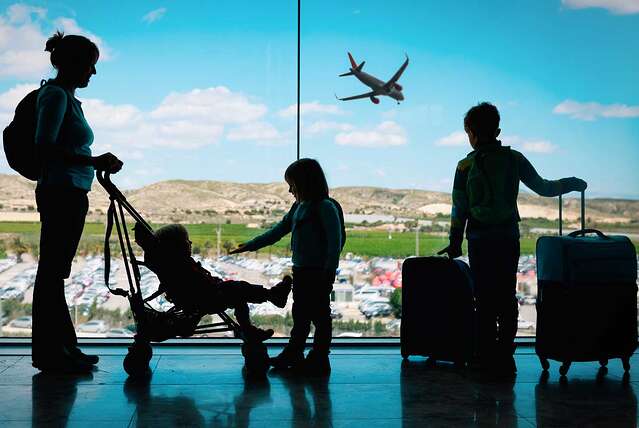
I’ve watched my nephew try beans for the first time at La Guarida in Havana, picking up and examining each one, almost as if testing it. I’ve seen him dip his feet in the Dead Sea (and then quickly pull them back out again), as well as enjoy gelato in the shadow of the Duomo in Florence.
He may not remember these adventures, but they will influence his development, according to Hancock. The most rapid brain development occurs in the first five years of a child’s life, and especially in the first three, she said. Surrounding children from birth to about age three with people who are different from them “normalizes” that experience.
“Traveling and teaching children about their roles as global citizens from a young age ensures that they will carry that message with them into adulthood,” she said. “When someone establishes a habit or tradition… early in life, it becomes the foundation through which they view the world for the rest of their life.”
Traveling with young children—even as young as six months old—can also help with their language development, said Erika Levy, an associate professor in the Department of Communication Sciences and Disorders at Teachers College, Columbia University.
“We know that when it comes to language, babies perceive sounds differently from adults. As they get older… they lose the ability to distinguish many of the other speech sounds,” said Levy. “If we surround them with speech sounds from all over the world… then we are helping them retain those categories, which benefits their language development later in life.”
And when they return home from a trip, their experiences can actually help them in school, according to Hancock.
“It makes them more open to trying new things [and] less wary of people and situations they aren’t familiar with,” she said. “It will inevitably make children more open-minded and help eliminate prejudice.”
Here are a few tips on how to make the most of your child’s travel experience.
Take a stroll through a local neighborhood.
While it’s great to see the major attractions in a destination, walking around a local neighborhood can be one of the most impactful moments for children, Hancock said. A child’s brain tends to make connections based on what is familiar to them. “If you’re in Venice, spend time on the Grand Canal, and if you’re in Paris, spend time by the Eiffel Tower, but the experiences that really resonate with children are the ones they can relate to,” she said. “ It will be meaningful for your child if you simply find a quiet neighborhood and go for a walk… Inevitably, you’ll see people sweeping their front yards and local vendors. And that’s much more meaningful—you’ll get a better sense of what everyday life is like, and your child will, too.”
Start a tradition while on vacation.
Traditions can help children connect with a trip. For example, when we were children, my sister and I collected soda bottles in every country we visited. “Traditions are meaningful for children,” said Hancock. “Anything that relates to a child’s world will be a meaningful experience for them.”
Let your kids play with other children.
According to Levy, grouping children with other children of similar ages will help their development, even if they don’t speak the same language. “Let them meet other children—they will play, learn, and find ways to communicate,” she said. “And they’ll learn that not everyone speaks English.”
Turn your trip into a game.
When asking children to point out things that are new to them, Levy recommended, “Have them show you three things they’ve never seen before at home.” She said, “You can organize a treasure hunt for them.”
Prepare your children in advance.
According to Levy, preparing children for what they’re about to experience can go a long way. For example, tell them in advance about jet lag, or if they’re nervous about traveling, bring a special toy on the plane. But ultimately, you shouldn’t be too worried: Levy said that children tend to be “more adaptable than we are in new situations.”
0 Comment